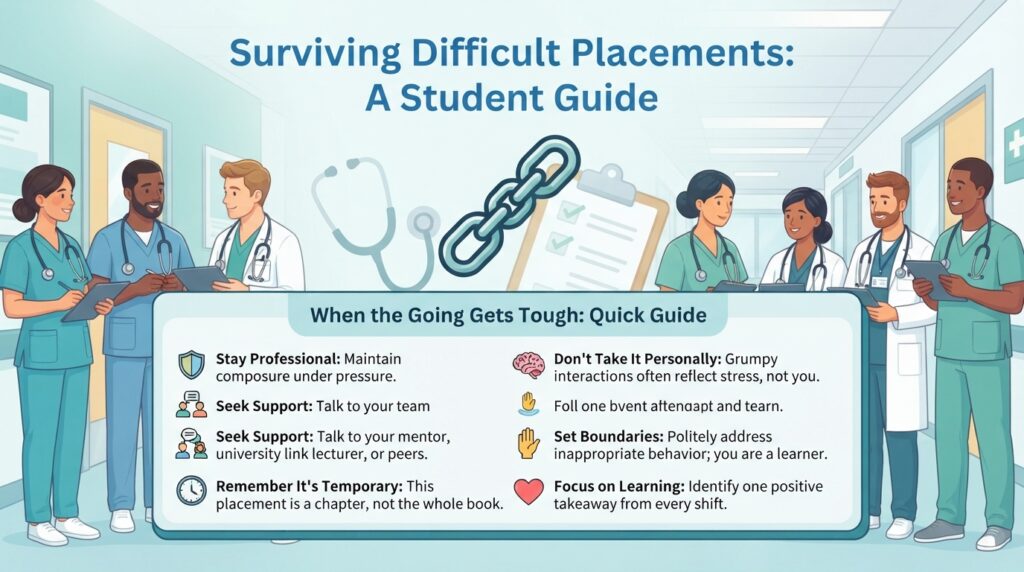
Walking onto a new ward or clinical area for the first time is daunting. Whether you are a brand-new Year 1 student stepping onto your very first shift or a Year 3 student preparing for final management, that knot in your stomach on Sunday night is completely real.
Here’s the truth: every single registered nurse was once in your shoes.
To help you hit the ground running (and keep your sanity intact), here are 10 Things I Wish I Knew Before My First Clinical Placement
1. The First-Day Jitters Are 100% Normal
If you feel overwhelmed during handover on Day 1, take a deep breath. Nobody expects you to know where the clean utility room is, how the door codes work, or what half the acronyms mean. Give yourself permission to be new.
2. Your HCAs Are Your Greatest Allies
Healthcare Assistants and Support Workers are the backbone of the ward. They hold a wealth of practical clinical knowledge. If you want to master fundamental care delivery, manual handling, skin integrity assessments, and patient communication—partner up with an experienced HCA during your first few shifts. Respect their expertise, work together as a team, and you will learn invaluable skills.
3. Ask Questions (Seriously, No Matter How “Basic”)
There is no such thing as a stupid question in healthcare—only an unsafe silence. If you aren’t 100% sure about a medication, a procedure, or an instruction given during handover, speak up. Asking questions shows self-awareness, professional curiosity, and a commitment to patient safety.
💡 Pro-Tip: Keep a small pocket notebook with you. Write down clinical jargon, unknown medications, or conditions you encounter during the shift, then look them up when you get home or during your break.
4. You Are a Learner, Not Unpaid Staff
While stepping in to assist the team during busy shifts is essential teamwork, you are on placement to fulfill your NMC learning outcomes. If you find yourself spending entire weeks solely completing basic care without clinical skill development, drug rounds, or learning opportunities, speak to your Practice Supervisor or Assessor. You are in charge of your learning journey.
5. Perfect the Art of the SBAR
Handover can feel overwhelming until you master a structured framework. Get comfortable using SBAR (Situation, Background, Assessment, Recommendation). Whether you are calling a doctor, handing over at shift change, or escalating a deteriorating patient, SBAR keeps your communication crisp, professional, and clear.
6. Take Your Breaks (All of Them!)
Nursing shifts are physically and mentally demanding. Skipping lunch or working through tea breaks doesn’t make you a better student—it makes you burnt out, error-prone, and exhausted. Step off the ward, hydrate, eat proper food, and give your brain a mental reset.
7. Invest in Good Shoes (Your Feet Will Thank You)
You will easily clock 10,000 to 15,000 steps during a 12-hour shift. Ditch style for comfort. Supportive, non-slip, liquid-resistant footwear is worth every penny.
8. Don’t Take Ward Grumpiness Personally
Occasionally, you might encounter a staff member who seems aloof, short, or unapproachable. Nine times out of ten, it has nothing to do with you—it’s short-staffing, heavy workload, or personal stress. Stay polite, stay professional, and focus on your patients and learning goals.
9. Learn to Reset When Shift Stress Hits
When a shift goes completely sideways—or a clinical scenario feels overwhelming—step away for 5 minutes if it is safe to do so. Wash your hands with cold water, take five slow breaths, and reset. (And if you ever feel completely stuck, head over to our Panic Zone tab for an instant reality check and support!).
10. Celebrate the Small Wins
Did you successfully insert your first catheter? Did you deliver a clear SBAR handover? Or did you simply comfort an anxious patient who was having a hard day? Celebrate it. Clinical training is a marathon, not a sprint. Every small win brings you one step closer to that pin.
💬 Over to You!
What is your #1 placement survival tip? Or if you’re heading out on placement soon, what is your biggest worry?
Leave a comment below, ask a question, or share your thoughts with the community!